
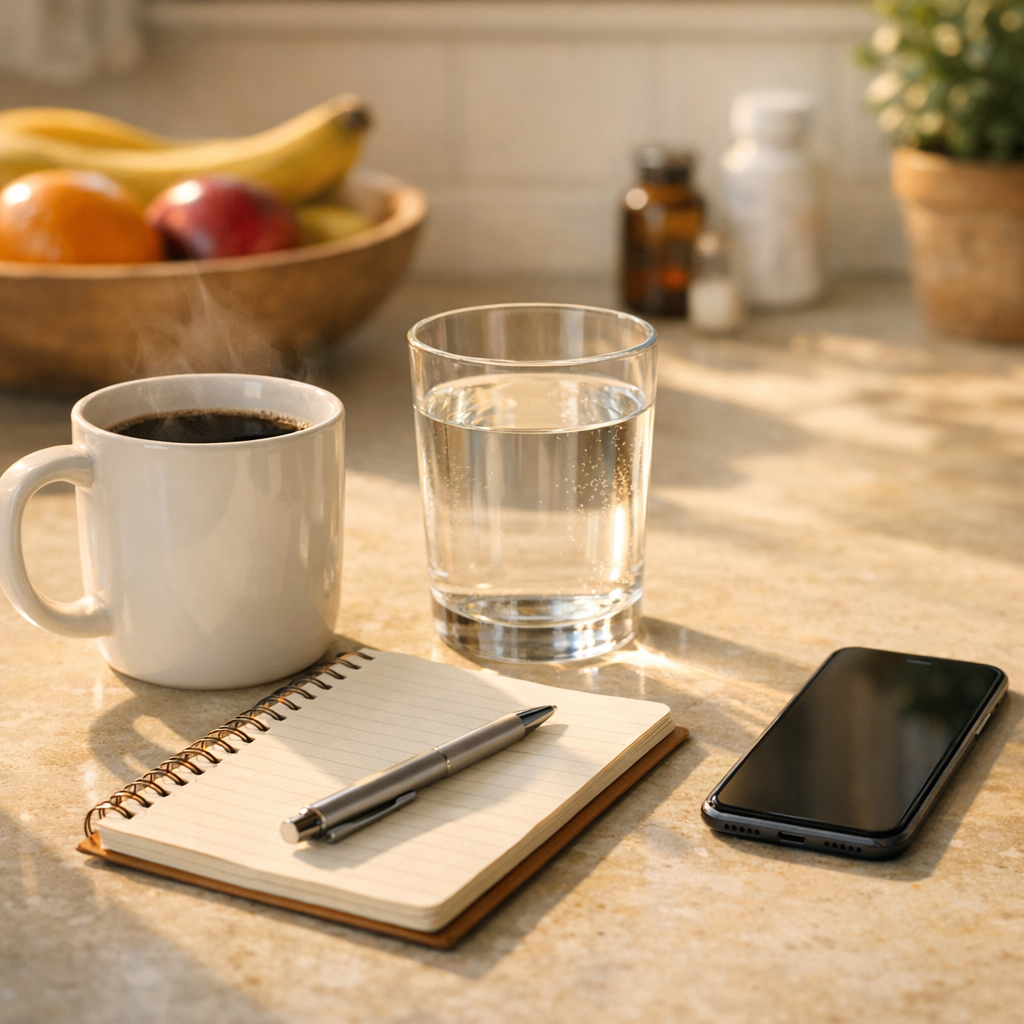
Most busy days do not fall apart because of one giant mistake. They drift off track because the first few decisions happen before you have a clear plan. You skip water, stay in bed a few minutes too long, and tell yourself you will deal with habits later. By lunch, the day already feels reactive.
A morning health check-in solves that by making the first few minutes intentional. It can be as simple as asking three questions: did I sleep well enough, do I need water now, and what one habit matters most today? That is enough to create a little structure without turning your morning into a project.
That matters because health routines get easier when they are visible early. A bottle on the counter, a reminder on the home screen, or a single check-in in HabitView can act like a reset button. It keeps the day from becoming a long chain of small delays.
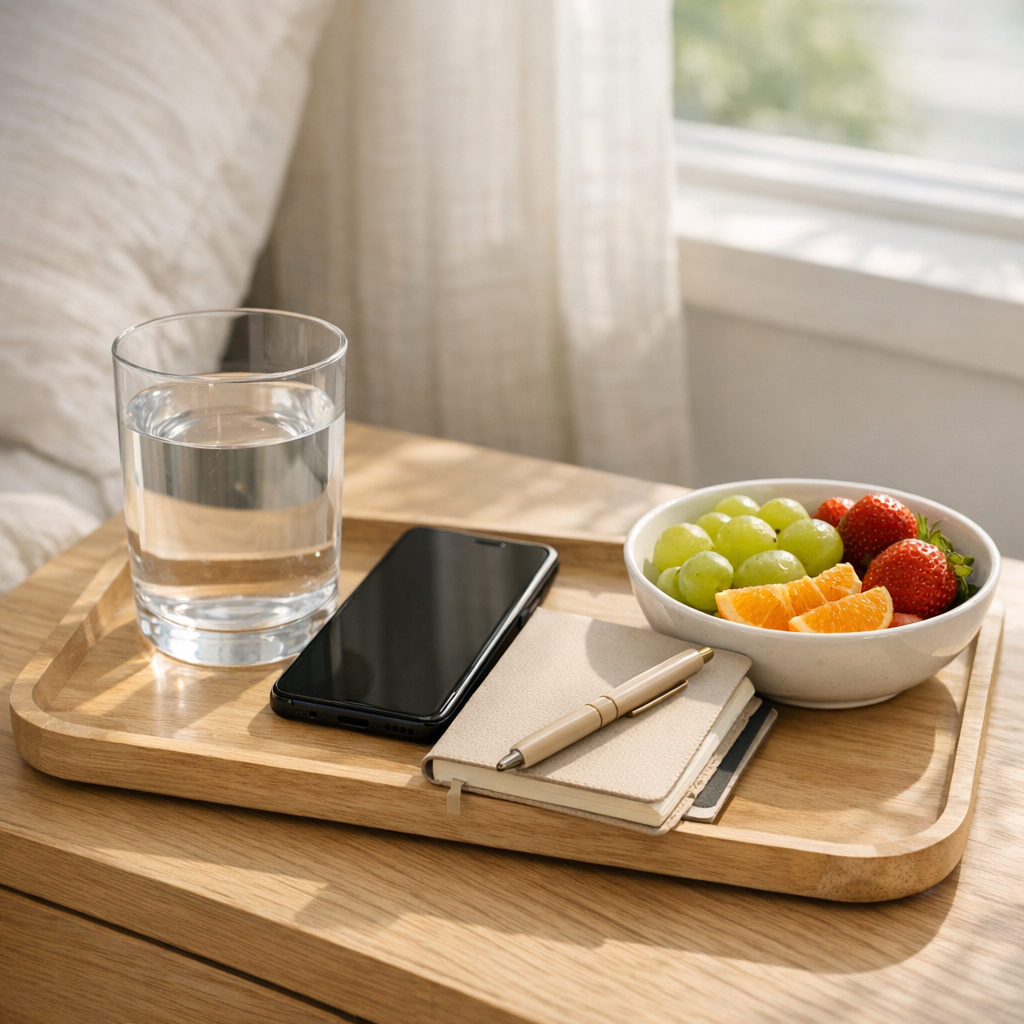
What to include in the check-in
- One quick look at sleep, so you know whether the morning should be gentle or ambitious.
- One glass of water, because hydration is easier to manage at the start than after you feel tired.
- One priority habit, so the day has a clear win even if everything else gets messy.
- One optional nutrition or movement cue, if Calory or FitnessView adds useful context.
Why it works
A short check-in works because it reduces friction. You are not making a giant plan, you are just making the day legible. When the first choices are obvious, there is less room for drift.
It also helps with consistency. A routine that takes two minutes is easier to protect than a routine that requires a perfect morning. On bad days, it can shrink to a single question. On good days, it can include a little more detail. Either way, it keeps the habit alive.
A simple 4-step version
- Open HabitView and check the one habit that matters most today.
- Drink water before checking messages or email.
- Glance at SleepMinder or your sleep history for one quick read on recovery.
- Decide on one small action for the next few hours, then move on.
Build the habit around the apps you already use
HabitView keeps the check-in visible. WaterMinder catches the hydration piece. SleepMinder and Calory add context when you need it.
Related Articles
FAQ
What is the point of a morning health check-in?
It gives you one quiet moment to check the basics, like sleep, hydration, and today’s top habit, before the day starts making decisions for you.
How long should it take?
Usually 2 to 5 minutes is enough. If it starts feeling like a chore, shrink it until it is easy again.
Which FunnMedia app fits this best?
HabitView is the best anchor for the check-in, and it pairs well with WaterMinder, SleepMinder, and Calory when you want a fuller view.
Should I do it every day?
Yes if you want the habit to stick. The win is not perfection, it is a repeatable reset that keeps the day from drifting.